top of page

When the pandemic hit back in March and classes at JJC originally went remote, I couldn't even think about the possibility of being back at school doing anything, let alone carving ice! After entering in one specific entrance, having my temperature checked by a tablet at the door, using hand sanitizer and wearing a face mask, it didn't feel normal by any means but it did feel great to be back!


I was asked to come back to JJC for an interview for the virtual National Community College Leadership Conference that was highlighting Joliet Junior Colleges' Culinary Program. I had spent 8 years in the industry decorating cakes, then went to JJC, graduated their program with high honors, and got hired as a professional ice carver. Without the proper attitude paired with intense drive and determination, that wouldn't have been possible. I was chosen to tell a little bit about my story and what JJC has done for my career.


Equally important, after getting hired in the industry at Nadeau's Ice Sculptures in Forest Park, IL, the things I have learned and am continuing to learn in their shop and on deliveries and setups is amazing. What I thought I knew after finishing ice class at JJC compared to what I'm learning working at Nadeau's was just the tip of the iceberg! ;) I just can't resist a good ice pun!


Interview for National Community College Leadership Conference:


For the virtual tour, I carved a couple of pieces along with other graduates and instructors to display for a candle lit tour of the ice lab. I chose to go with something seasonal, I just can't get enough of all things pumpkin these days! This pumpkin-headed scare crow ice carving was fun to do with the taller ice blocks that they use at JJC. This carving was almost as tall as me!


I've always had a love of making food items that are made out of other foods. Whether it's a big cake that looks like a stack of pancakes, a deconstructed apple pie that looks like a green apple, or a big ole' pizza made out of extremely detailed fondant, gum paste, and airbrush work, it brings out the kid in everyone that gets to enjoy it (and the kid in me as I get to make them all... :) ).

So, I was pretty excited to make an ice cream cone out of ice that was almost five feet tall. Obviously. After all, I scream, you scream, for five foot tall ice cream... right? ;)


Although the larger ice blocks are fun to use for extra height in certain pieces, the downside is the way in which they have to be formed. Without boring you all with the science and methods behind how different ice blocks are made, it's easy to see the shadow in the middle of the scarecrow ice carving and this ice cream cone ice carving right here. These blocks are frozen vertically with a hose that is slowly pulled out of the center of the block, leaving behind a thin shadow that will never melt out of the block as its on display.


While working at Nadeau's, we love to light our ice carving displays with colored lights to accent the theme of the party and really highlight the details of the piece. We make our ice using a completely different method which leaves the ice clear and beautiful throughout. It involves freezing the ice horizontally and very slowly, as well as eliminating the air from the ice. This makes the finished ice carvings clear, clean, and highlighted beautifully when they are lit and on display.


Chef McGreal did an ice carving demo for the virtual National Community College Leadership Conference, look at him in action! He's showing the students in the class currently what their angel fish carving assignment is going to be the following week. I remember when I was at that point in class for the first time, taking on a more whimsical design instead of all straight edges with platters and vases. I was so nervous! And so were they. But that's part of it when it comes to ice carving, if you ask me. If you're not nervous, you're not learning. I've heard that from many great Chefs throughout my career.
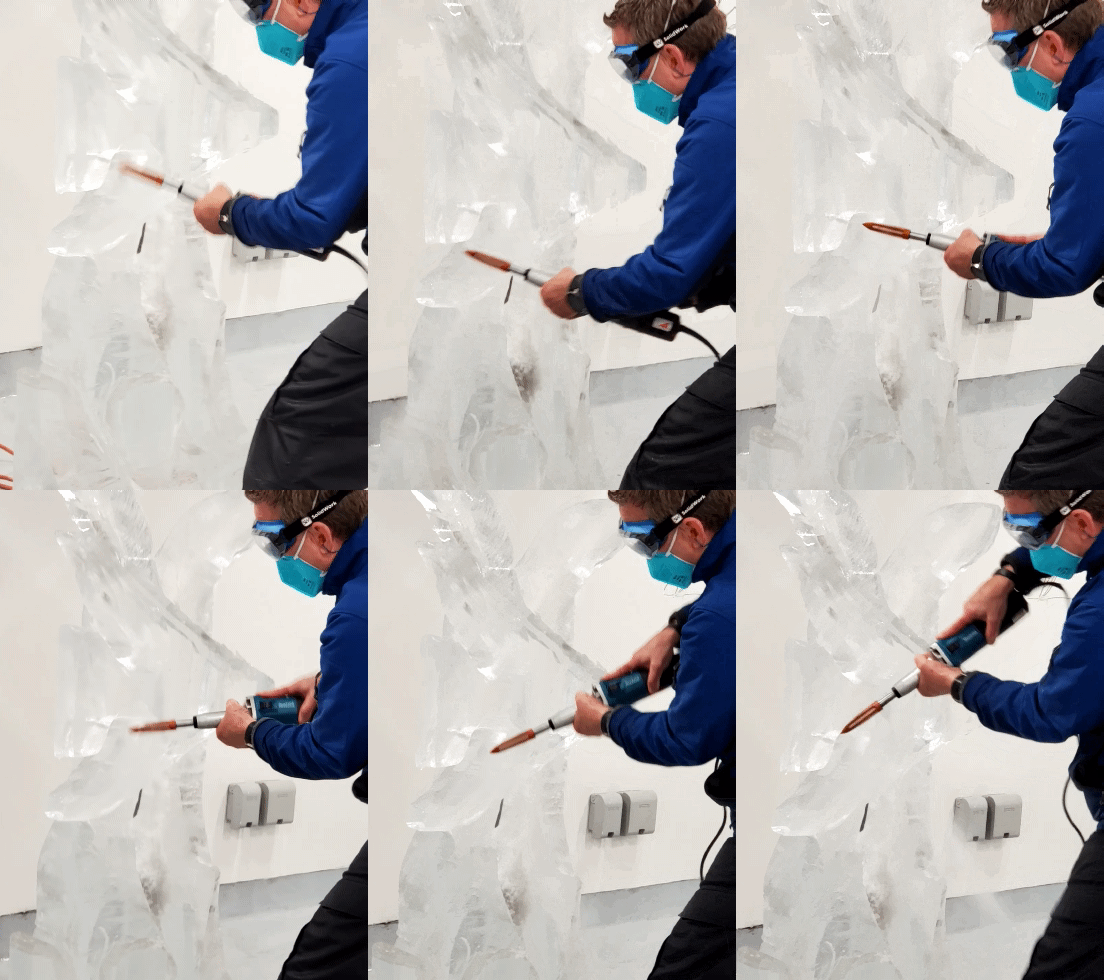
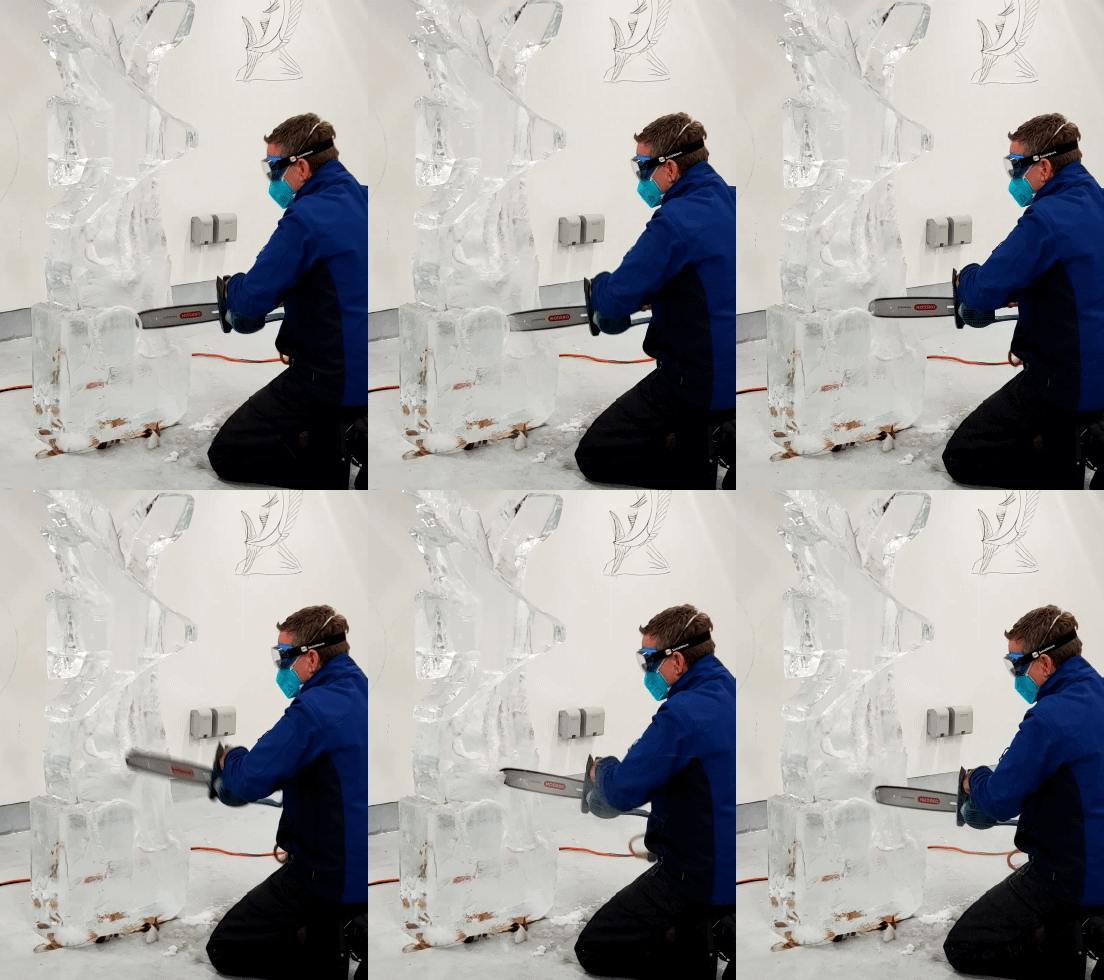
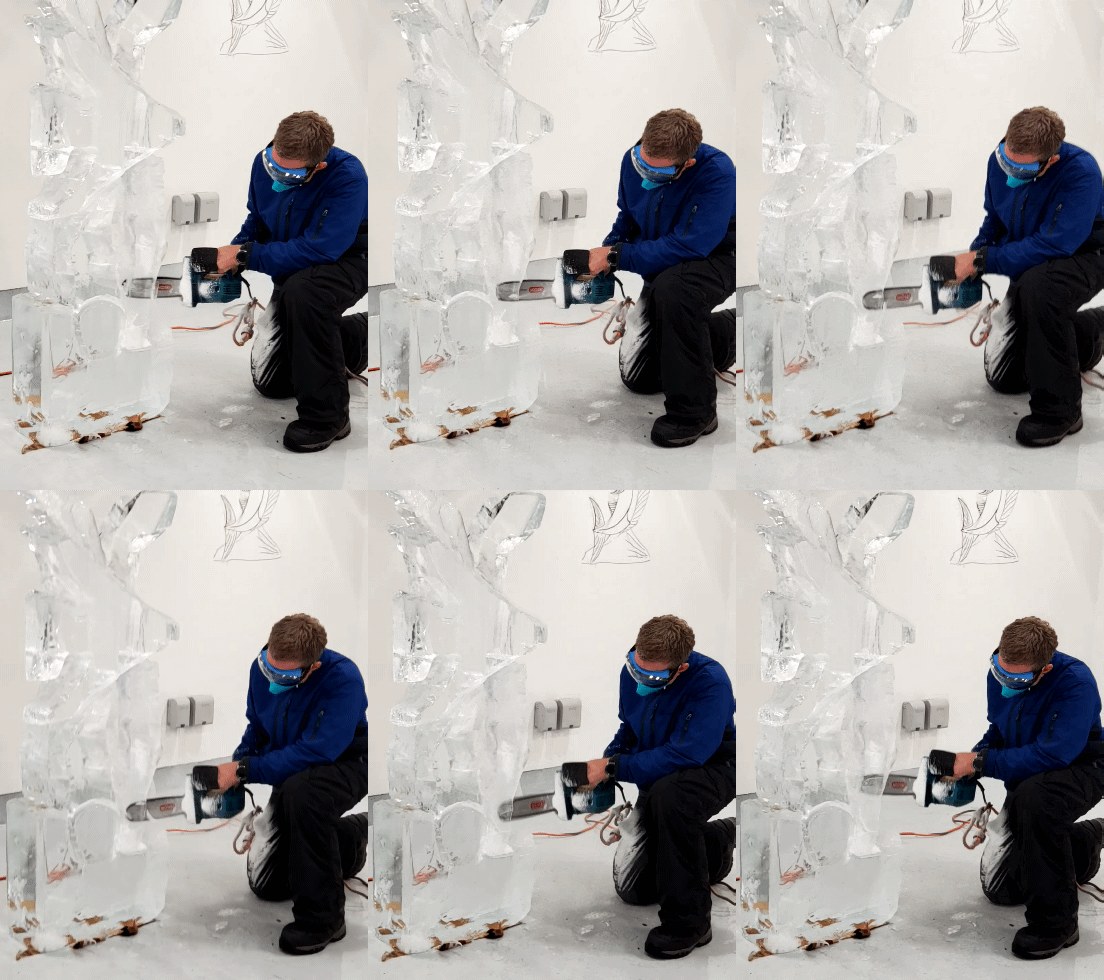
Here is the candlelit tour of the ice carvings in the lab at JJC. This place is truly magical, I have to say. It was my first introduction to what an ice carving could really be (I remember getting goose bumps the first time I saw Chef carve a piece, and not because I was cold! ;) ), and gave me the experience I needed to get started in the professional ice carving world.


Overall, ice changed my life. A simple and humble ingredient, water, and a complex and beautiful way to manipulate it into something that looks like a sculpted diamond. Then it melts away after several hours and is completely gone. You need confidence, strength, a basic understanding of physics, artistic ability, and quick wits to be a successful ice carver. I've spent a lot of my life learning these separate characteristics. After all, after I graduated high school I did start out going to college to be a physics teacher. I'm learning more every day, and see how far I have to go to be as great as I want to be at it. I have to say, I never thought I would be learning personal life lessons, building relationships with great mentors and role models, pushing my own physical and mental capabilities as a woman, an artist, and a chef, and creating works of art all thanks to something as simple and beautiful as ice.


I love to braise food. Period. I was taught to love to braise food from Chef Thompson and Chef Bucci from JJC, two Chefs who may love to braise more than I do. But the reason I love it, and the reason they taught me to love it, is because it takes a humble piece of protein (and vegetables!) and breaks them down in a way that makes them luxurious and delicious to eat. Now, who wouldn't love that?!


I do think that a lot of people don't take the time to braise the correct way. Honestly, a lot of times we shortcut braising at our house on weeknights. If you finish it right, it can be done! But, that's for another blog post. ;) Today, we do it like the French!


Steps to a braise:

1. Mise en place. I gather everything I need and get it on the counter. This helps me make sure I have everything I need to make the dish in the first place, and leaves everything available to me at the time that I need it.


Ingredients:

aromatics: mire poix (onion, celery, carrots), garlic, ginger, herbs, etc.

protein: something with some good connective tissue and some fat, like a chuck roast, chicken thighs, or pork shoulder

flavorful liquid: wine, stock, orange juice, soy sauce, fish sauce, tomato juice, etc.


The other reason I love braising so much is because the flavor combinations are endless. There is really no set recipe for braising, the browning of the ingredients and seasoning throughout each step and then finishing with a slow and low cooking approach is really the magic here.


So, first thing is first. When we're talking about flavorful liquid, stock is the place to start. Make your own, and the results are more flavorful than the store bought stuff. Just the color of homemade stock vs. store bought stock speaks for itself. Don't have several hours to make your own stock? You can order some from the FCS shop (see how it's made below)!


Next thing I do, before I mise anything else, is get the protein browning in a cast iron pan. Proper browning of protein is what flavors the entire dish. It can sometimes take 20 minutes to properly brown the protein you're using if it's something like beef short ribs or pork shank, so you might as well get that going and then start on everything else! Once the protein is browned, remove it from the pan and add just the mire poix (large chunks for long cook time so you don't end up with super mushy vegetables at the end). Let the mire poix or other vegetables of your choice get nice and brown around the edges (this requires leaving the vegetables to cook in the pan WITHOUT stirring too often). Then it's time to add the rest of the aromatics like garlic, ginger, whole herbs like thyme, and then I threw in some tomatoes. As a rule of thumb, wet ingredients like tomatoes go in right before the flavorful liquid.


At this point, it's time to thicken things up with a roux. I sprinkle the flour directly onto everything I have in the pan, then I drizzle in some bacon fat (any flavorful fat will do here) to get the roux to the right consistency. Once the flour is starting to slightly coat the bottom of the pan, it means the raw flour taste has been cooked out of it and it's time to add the flavorful liquid.


In our house, we always start with wine. Get a nice deglaze going, then any flavor boosters like soy sauce or Worcestershire sauce are great, and then a nice dark stock. Depending on the cut of meat, the pan used, and how large of a braise you're making, the liquid amount will be different every time. Ideally, it will go 1/2 to 2/3 as high as the meat that is being braised in the pan. Then, cover with foil and a lid and put it in the oven at 350 degrees UNTIL TENDER. There's no exact timing on this, especially given the varieties of meat than can be braised.


I decided to make some mashed potatoes to go with this braise, and I went ahead and took the liquid from the braise after the meat was tender and reduced it (skimming the impurities off of the top with a spoon during this process for a more refined sauce) until it was nappe (thick enough to cover the back of a spoon) and then mounted in some butter and added a squeeze of lemon juice, and season to taste. So simple, but the sauce turns out so good.

I have to say, the end result is always delicious. You know how I know? Because it's a very slow process. And, as Chef Thompson always said, "Slow food tastes good." The silver lining here is that during the whole process, the smells lingering in the house, the warmth coming from the range as the ingredients saute, and the sounds of the popping and sizzling as everything cooks together are enjoyed by everyone in the kitchen. These elements in the kitchen paired with the end result of braise is where the true magic is, if you ask me.


As cheesy as it is to quote an old, overplayed, and completely overused Vitamin C song for a blog post title, I find myself without any other words. Graduation. Something most people get to do maybe a couple times in their life.


This year, (I guess when Vitamin C said "come whatever," she meant Covid...) school was abruptly ended and no goodbyes were exchanged. We all left thinking there would be another day at school with our favorite food, our favorite Chefs, learning our favorite things,

in our favorite building in the world: Joliet Junior College City Center.


This is the group of wonderful people I spent my first semester with at JJC.


This is me after my first 8 weeks of Culinary School knife skills in 112 with Chef Thompson. I was so excited! And had so much more to learn.


This is after the end of my first semester at JJC. If that's not an adorable plate of chicken picatta, I don't know what is! :) :)


Once I had been through my entire experience at JJC, my life had been completely changed. I had incredible memorable moments in a few key classes there that changed my complete outlook on what Culinary could be.


112 with Chef Thompson - You are so inspiring. Being the first impression for students at JJC as an instructor of 112 is an important role, and you are doing a remarkable job. I'll never forget my time in your class on the fifth floor. And even in the fabrication labs when I would struggle the most, I ultimately learned the most about myself. Thank you for everything you taught me.

Showpieces and French Pastry with Chef Andy - You have said one thing that I'll always remember, and that is that you've forgotten more about pastry and showpieces than you'll ever be able to teach in class. That is no freakin' joke. I wish I would have been able to finish that chocolate showpiece of the flower pot shelf, when the ACF starts competitions we'll be at it again I hope!

Center of the Plate and all of the Friday nights in Thrive with CMC Bucci - You're a badass, a super nice guy, extremely intimidating, and honestly surprising at times. I'm grateful for all you taught me. For anyone not familiar, CMC stands for Certified Master Chef, and I feel honored to have had a CMC to teach me at JJC.

Ice Carving with Chef McGreal - You were the first friendly face I spoke to at JJC and the one that got me started with ice carving. I will forever be grateful. I miss your cheerleader attitude while I'm carving! Thank you for everything you've done for all of your students, including me. You have such a big heart!

Cost and Portion with Chef Richardson-I'll always agree with what you said the first day of class; you're teaching us the most important thing at school. Thank you for making that so abundantly clear from the beginning.

Flavor Pairing Dynamics with Sommelier Bell - You have an understanding of the dining room that is amazing. I value all of the time I spent learning from you and am bummed I didn't get to serve you an amazing final meal at the end of class. I'm grateful for the way you taught us to think about wine and food as a whole.


As the pandemic progressed, obviously the virtual ceremony is what JJC ended up going with to keep all of their students safe. We were able to submit a photo and video, so I filmed this carving video for all of the graduates of 2020.


Looking back on these moments with this chapter of my life completed, I am completely grateful. I was so lucky to be able to have the opportunity to go back to college later in life and enjoy my passion fully (Robert Grafer I am so grateful for your unending support through the entire process <3 ). Going to JJC helped me find myself and solidify my personal core values, not to mention introduce me into a world of amazing Chefs that showed me what being a Chef is about in the first place.


As we go on... we remember... all the times we spent together. And as our lives change, come whatever, we will still be CHEFS forever.


bottom of page